
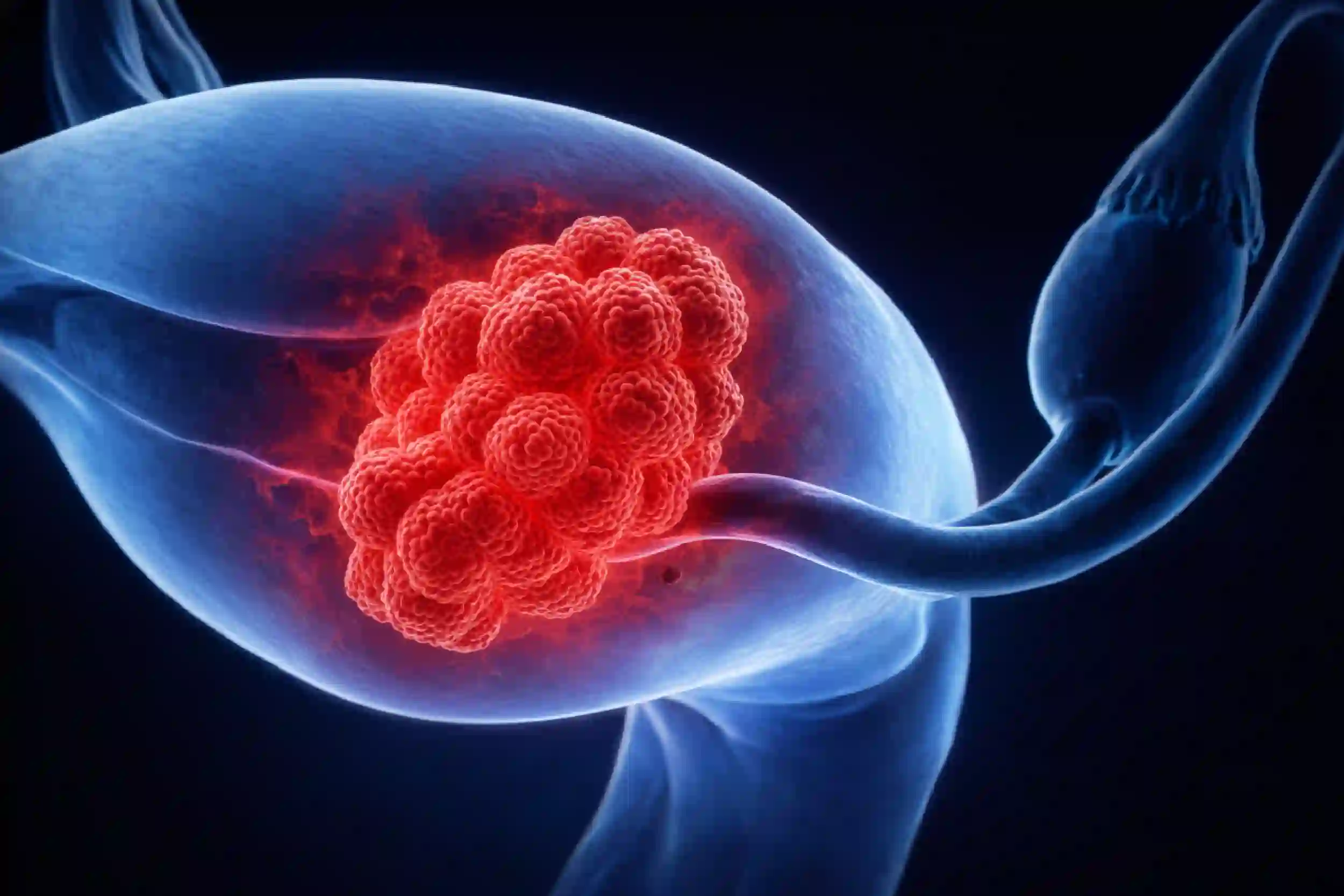
Ovarian Cancer Treatment – Comprehensive, Specialized Care
Ovarian cancer is the most lethal gynecologic malignancy, often diagnosed at advanced stages when symptoms finally appear. However, with expert surgical management, appropriate chemotherapy, and comprehensive follow-up, many women achieve excellent outcomes and long-term survival.
Dr. Aiswarya Sekar provides specialized ovarian cancer treatment with advanced surgical techniques, evidence-based decision-making, and personalized care for each patient’s unique situation
Understanding Ovarian Cancer
Ovarian cancer develops in the ovaries, fallopian tubes, or peritoneum (abdominal lining). Because early ovarian cancer rarely causes symptoms, approximately 75% of cases are diagnosed at advanced stages when cancer has spread beyond the ovaries.
Types of Ovarian Cancer
Epithelial Ovarian Cancer – The most common type, arising from the surface cells of the ovary or fallopian tube. Includes subtypes like high-grade serous, endometrioid, clear cell, and mucinous carcinomas.
Germ Cell Tumors – Rare cancers affecting younger women, often curable even at advanced stages.
Sex Cord-Stromal Tumors – Uncommon cancers that may produce hormones, causing unusual symptoms.
Borderline Tumors – Low malignant potential tumors with excellent prognosis but requiring specialized management.
Risk Factors
- Family history of ovarian, breast, or colon cancer
- Genetic mutations (BRCA1, BRCA2, Lynch syndrome genes)
- Increasing age (most common after menopause)
- Never having been pregnant
- Endometriosis
- Hormone replacement therapy
Symptoms and Diagnosis
Early ovarian cancer typically causes no symptoms. When symptoms develop, they may include:
- Abdominal bloating or swelling
- Pelvic or abdominal pain
- Difficulty eating or feeling full quickly
- Urinary urgency or frequency
- Changes in bowel habits
- Unexplained weight loss
Diagnostic Evaluation:
Early ovarian cancer typically causes no symptoms. When symptoms develop, they may include:
- Abdominal bloating or swelling
- Pelvic or abdominal pain
- Difficulty eating or feeling full quickly
- Urinary urgency or frequency
- Changes in bowel habits
- Unexplained weight loss

Treatment Approaches
Primary Cytoreductive Surgery
For most ovarian cancers, initial surgery aims to remove all visible disease—a concept called “optimal cytoreduction.” This complex procedure may involve:
- Removing only the affected ovary and fallopian tube (After careful evaluation of the recurrence risk and oncological outcomes
- Omentectomy (removal of fatty tissue covering intestines)
- Lymph node dissection
- Peritoneal biopsies and washing
- Removal of disease from bowel, diaphragm, liver surface, or spleen when necessary
Complete removal of all visible cancer provides the best chance for long-term survival. Dr. Aiswarya has extensive training in these complex upper abdominal procedures, performing diaphragmatic stripping, liver mobilization, and complete peritonectomy when needed.
Neoadjuvant Chemotherapy Followed by Interval Surgery
For very advanced disease or women who are not initially surgical candidates, treatment may begin with chemotherapy to shrink tumors. After 3-4 cycles, “interval cytoreductive surgery” is performed to remove residual disease, followed by additional chemotherapy.
Dr. Aiswarya carefully evaluates each patient to determine whether primary surgery or neoadjuvant chemotherapy offers the best approach, using evidence-based criteria and multidisciplinary discussion.
HIPEC (Hyperthermic Intraperitoneal Chemotherapy)
HIPEC involves delivering heated chemotherapy directly into the abdomen during surgery, immediately after removing all visible cancer. This technique treats microscopic disease that may remain after cytoreduction.
HIPEC is considered for selected patients with advanced ovarian cancer, particularly at the time of interval surgery after neoadjuvant chemotherapy. Dr. Aiswarya has managed over 100 HIPEC patients and carefully evaluates candidates based on disease characteristics, overall health, and evidence-based guidelines.
Fertility-Sparing Surgery
Young women with early-stage ovarian cancer who desire future pregnancy may be candidates for fertility-sparing surgery. This involves:
- Removing only the affected ovary and fallopian tube
- Leaving the uterus and other ovary intact
- Careful surgical staging to ensure cancer hasn’t spread
- Close monitoring during follow-up
Dr. Aiswarya provides detailed counseling about risks and benefits, helping young women make informed decisions about balancing fertility goals with cancer treatment.
Surgery for Recurrent Ovarian Cancer
When ovarian cancer returns after initial treatment, surgery may again play a role. “Secondary cytoreduction” can benefit carefully selected patients, particularly those with long intervals since initial treatment and limited areas of recurrence.
Chemotherapy and Targeted Therapy
Most women with ovarian cancer receive chemotherapy, typically carboplatin and paclitaxel. Treatment usually begins 3-4 weeks after surgery and continues for 6 cycles.
Additional treatments may include:
- Bevacizumab – A targeted therapy that blocks blood vessel growth to tumors
- PARP inhibitors – Maintenance therapy for BRCA-mutated or platinum-sensitive cancers
- Immunotherapy – Emerging role in certain ovarian cancer subtypes
Dr. Aiswarya works closely with medical oncologists to coordinate optimal chemotherapy and targeted therapy based on individual cancer characteristics and genetic testing results.
Genetic Testing and Hereditary Cancer
Approximately 20-25% of ovarian cancers are associated with inherited genetic mutations. All women with epithelial ovarian cancer should undergo genetic testing for:
- BRCA1 and BRCA2 mutations
- Lynch syndrome genes
- Other hereditary cancer genes
Genetic testing results impact:
- Treatment decisions (PARP inhibitor eligibility)
- Family cancer risk assessment
- Screening recommendations for relatives
Dr. Aiswarya provides genetic counseling and coordinates testing, helping patients and families understand results and implications.
Managing Borderline Ovarian Tumors
Borderline tumors have low malignant potential and excellent prognosis but require specialized management. Treatment involves:
- Complete surgical staging to rule out invasive cancer
- Fertility-sparing surgery often possible
- Long-term surveillance without chemotherapy in most cases
Follow-Up and Survivorship
After completing treatment, regular follow-up appointments monitor for recurrence and address quality-of-life concerns:
- Physical examination and symptom review
- CA-125 testing when indicated
- Imaging studies if symptoms suggest recurrence
- Management of treatment side effects
- Menopause symptom management
- Emotional and psychological support
Dr. Aiswarya provides comprehensive survivorship care, addressing both medical and quality-of-life needs throughout the cancer journey.
Second Opinions and Incomplete Surgery
If you underwent surgery elsewhere and cancer was unexpectedly found, or if staging was incomplete, Dr. Aiswarya can evaluate whether additional surgery is needed. Proper initial staging ensures accurate treatment planning and avoids undertreatment.
Why Specialized Expertise Matters
Ovarian cancer surgery is among the most complex procedures in gynecologic oncology. Studies consistently show that patients treated by subspecialty-trained gynecologic oncologists have:
- Higher rates of optimal cytoreduction
- Better survival outcomes
- Lower complication rates
- More appropriate adjuvant treatment
A Personalized Approach
Every woman’s ovarian cancer journey is unique. Dr. Aiswarya takes time to understand your diagnosis, discuss all treatment options, address concerns about fertility or quality of life, and develop a plan aligned with your values and goals.
If you’ve been diagnosed with an ovarian mass or ovarian cancer, specialized consultation can make a significant difference in your outcome. Contact us today to schedule an appointment.