
Her family had already started asking around. A cousin’s colleague knew someone who’d had surgery at one place, an aunt swore by another, and every suggestion came wrapped in good intentions but no real way to compare them. Somewhere in that noise, she typed the question plainly into her phone: what’s the best hospital for gynecologic cancer surgery Chennai actually has to offer, and how is anyone supposed to know?
Rela Institute Gynecologic Oncology: What Sets a Specialist Department Apart
A hospital’s gynecologic oncology department isn’t defined by the size of the building or the length of its patient list. It’s defined by whether the surgeons on staff are specifically trained in cancer surgery, whether the facility has the equipment and support teams to manage complex cases, and whether care is coordinated across surgery, pathology, and oncology rather than scattered across separate departments that don’t talk to each other.
At Dr. Rela Institute and Medical Centre, the gynecologic oncology department centres around fellowship-trained specialists working alongside pathology and medical oncology teams under one roof. That structure matters more than it might seem at first. When a biopsy result needs urgent review, or when a surgical plan needs input from a radiation oncologist, the distance between departments, literally and administratively, affects how quickly and accurately a patient’s care moves forward.
For a family trying to evaluate where to go, the honest answer isn’t a single “best” institution in any absolute sense. It’s whichever hospital has the specific combination of trained specialists, technology, and coordinated care that your situation requires.
That’s a harder answer to sit with than a simple ranking, but it’s the more useful one. A hospital that’s excellent for cardiac care isn’t automatically the right choice for a complex ovarian cancer staging surgery, and a large multi-specialty brand name doesn’t guarantee a fellowship-trained gynecologic oncologist is actually on staff. The right question isn’t which hospital is biggest or best known. It’s which one has the specific expertise your diagnosis calls for.
Why This Matters for Women in Chennai and Tamil Nadu
For a long time, families across Tamil Nadu treated a serious gynecologic cancer diagnosis as an automatic reason to travel to Mumbai or Delhi, assuming that specialist-level care simply wasn’t available closer to home. That assumption cost people time, money, and the comfort of being near family during treatment, often for a level of care that has since become available locally.
Patients asking which hospital is best for gynecologic cancer surgery in Chennai are often really asking a narrower, more useful question: does this city have surgeons trained the way the top national centres train theirs. It does now. Reading through Rela Institute robotic cancer surgery reviews and patient accounts, a pattern emerges of women who once assumed they’d need to leave the state discovering they didn’t have to. Chennai has become one of the cities worth including when people compare top cancer surgery hospitals across South India for women, rather than an afterthought on that list.
Dr. Aiswarya Sekar's Approach and Expertise
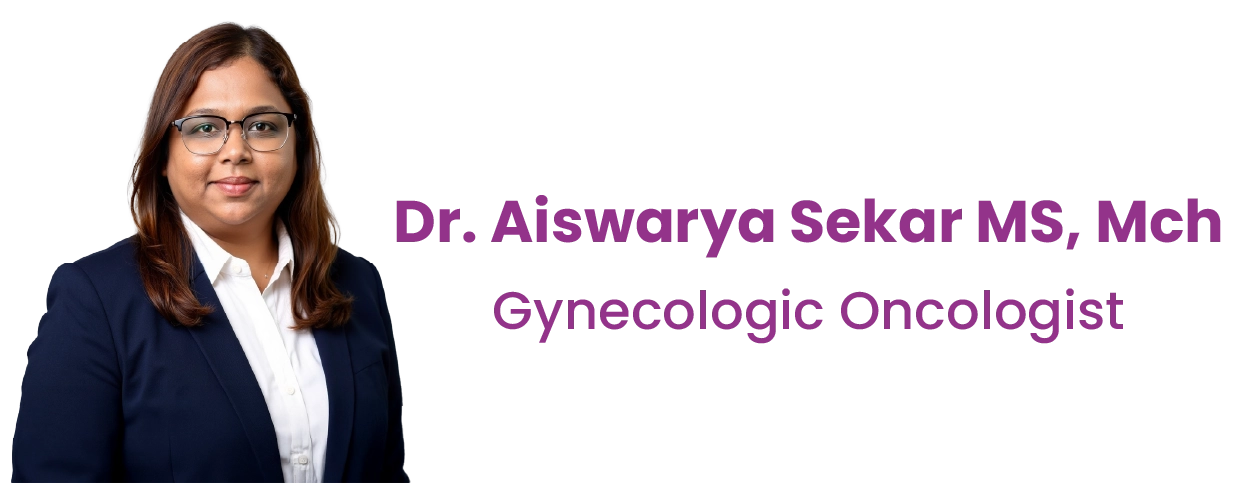
Dr. Aiswarya Sekar’s MCh in Gynecologic Oncology from Tata Memorial Hospital in Mumbai places her training on par with the country’s most respected cancer surgery programs. She brings that background to Dr. Rela Institute and Medical Centre in Chromepet, where she practises as a robotic gynecologic oncosurgeon handling a full range of gynecologic cancer cases.
Her use of robotic surgical technique allows for more precise tumour removal and lymph node staging with smaller incisions than traditional open surgery, translating into a generally smoother recovery for patients. She’s also become a resource for patients whose concerns extend beyond a confirmed cancer diagnosis. Someone searching for the best robotic surgeon for endometriosis with cancer risk, for instance, or wondering when to see an oncologist for endometriosis in Chennai, often ends up at the same department, since the surgical precision and oncology judgment required overlap significantly with cancer surgery itself.
What distinguishes her approach isn’t a single technique but a consistent philosophy: treat the specific patient and pathology in front of her, not a generalised protocol.
That philosophy also shows up in how she communicates. Surgical terms get explained the first time they’re used, not assumed as common knowledge, and patients are given room to ask the same question twice if the first answer didn’t fully land. For a diagnosis this significant, that patience isn’t a nicety. It’s part of the care itself.
What to Expect: Your Care Journey at Rela Hospital
Your first consultation typically involves a thorough review of your existing reports, imaging, and symptoms, followed by a clear explanation of what further testing, if any, is needed before a treatment plan can be finalised. Nothing moves forward without you understanding why.
If surgery is recommended, you’ll be walked through whether a robotic approach fits your case, what the procedure involves, and what recovery typically looks like. The gynecologic oncology department at RIMC coordinates directly with pathology for rapid results and with medical oncology should additional treatment be needed after surgery, so you aren’t left managing referrals between disconnected specialists on your own.
Follow-up care continues on a structured schedule well past your surgical recovery, with the same team tracking your progress rather than handing you off elsewhere once the operation is behind you.
That continuity extends to the small logistical details that often get overlooked when comparing hospitals on paper: how quickly a report actually gets shared with you, whether a nurse coordinator is reachable between visits, and whether questions that come up at home get answered before your next scheduled appointment. These details rarely appear in a hospital brochure, but they shape the day-to-day experience of treatment far more than most patients expect going in.
Warning Signs: When You Should See a Specialist
Regardless of which hospital you’re considering, certain symptoms warrant a gynecologic oncology consultation without delay:
Bleeding after menopause, even a single episode
Persistent pelvic pain or pressure lasting several weeks
A pelvic mass that is enlarging or described as irregular on imaging
Unexplained bloating, appetite changes, or early fullness alongside pelvic symptoms
A strong personal or family history of ovarian, uterine, or breast cancer
Abnormal Pap smear or HPV results needing further evaluation
Always consult a qualified medical professional for diagnosis and treatment. Self-diagnosis based on online information is never a substitute for a clinical evaluation.
Choosing a hospital for cancer surgery is rarely just a medical decision. It’s a decision about who you trust to guide you through one of the hardest chapters of your life, and taking time to research that choice is completely reasonable. Ask about credentials. Ask how many similar surgeries a department handles. Ask who you’d actually be speaking to if a question came up mid-treatment. A team confident in its own care will welcome those questions rather than deflect them. Dr. Aiswarya Sekar and the gynecologic oncology team at Dr. Rela Institute and Medical Centre in Chromepet, Chennai, welcome that kind of careful consideration. If you’d like to discuss your case or request a second opinion, reach out to book a consultation or visit the OPD, and take the next step with a team that will explain every part of the path ahead.
Rencent Blogs.
-
Best Hospital for Gynecologic Cancer Surgery Chennai
-
Robotic Surgery Endometriosis Cancer Risk Chennai Guide
-
Post Hysterectomy Cancer Diagnosis Consultation Chennai
-
Choosing Surgeon for Gynecologic Cancer Surgery Chennai
-
Robotic Surgery Uterine Cancer Chennai: Fibroid or Cancer?
-
Fertility Preserving Ovarian Cancer Treatment in Chennai
-
Advanced Ovarian Cancer Treatment Specialist in Chennai
-
Lynch Syndrome Uterine Cancer Consultation in Chennai Explained
-
Endometrial Cancer Symptoms: When to See a Doctor in Chennai
-
Robotic Surgery for Gynecologic Cancer Cost in Chennai