Ovarian Cyst Specialist Consultation Chennai
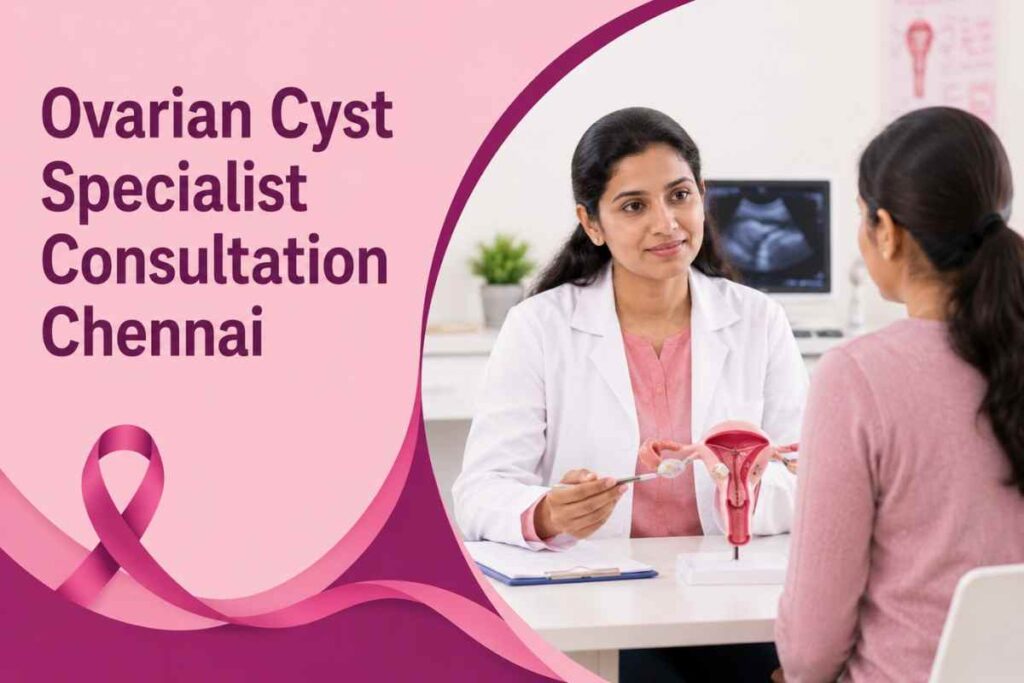
Ovarian Cyst Specialist Consultation Chennai Meera went in for a routine scan and the radiologist mentioned a cyst on her left ovary. Her gynecologist said it was probably nothing, but probably did not sit well with her, and she found herself searching late that night for an ovarian cyst specialist consultation Chennai women could trust for a second opinion. That search, and the anxious hour before it, is more common than most people realise. Understanding Ovarian Cyst Cancer Risk Evaluation An ovarian cyst is a fluid-filled sac that forms on or inside the ovary. Most are functional, meaning they form as part of the normal menstrual cycle and disappear on their own within a few weeks. These are not dangerous and rarely need treatment beyond monitoring. The difficulty is that not every cyst looks straightforward on a scan. Some have solid components, irregular walls, or blood flow patterns that need a closer look. This is where an ovarian cyst cancer risk evaluation becomes relevant, not because most cysts turn out to be cancer, but because a small number do, and distinguishing between them requires trained eyes and sometimes additional imaging or blood markers like CA-125. For a patient, this uncertainty is the hardest part. You are not being told you have cancer. You are being told the possibility has not been ruled out yet, and that gap between those two statements can feel unbearable until someone walks you through it properly. Why This Matters for Women in Chennai and Tamil Nadu Ovarian masses are frequently picked up incidentally during routine scans, antenatal checkups, or unrelated abdominal imaging across clinics in Chennai. What happens after that discovery varies widely depending on who reads the scan and who the patient is referred to next. Many women in Tamil Nadu are first seen by a general gynecologist, which is appropriate for most cysts. But when a scan shows features that raise concern, the next step matters enormously, and this is exactly when should I see a gynecologic oncologist for ovarian cyst becomes the right question to ask rather than waiting for reassurance from a repeat scan alone. A gynecologic oncologist reads imaging differently, with training specifically aimed at distinguishing a benign cyst from an early ovarian tumor before surgery is even planned. Having that expertise based in Chennai, rather than requiring travel to Mumbai or Bangalore for a specialist opinion, changes how quickly a woman can get clarity during an already anxious wait. Dr. Aiswarya Sekar’s Approach and Expertise Dr. Aiswarya Sekar trained in gynecologic oncology at Tata Memorial Hospital, where evaluating ovarian masses accurately, and deciding which ones need surgical intervention versus watchful monitoring, is a core part of daily clinical work. That training shapes how she approaches all ovarian tumour diagnosis Chennai patients bring to her, starting with a careful read of imaging rather than a reflexive recommendation for surgery. At Dr. Rela Institute and Medical Centre in Chromepet, she uses a combination of clinical examination, imaging review, and tumor marker testing to assess risk before deciding on a management plan. For cysts that require surgical removal, she prioritises minimally invasive and robotic-assisted techniques where appropriate, and takes a fertility-preserving approach for younger women whenever the clinical picture allows it. For many patients wondering is my ovarian cyst cancerous doctor consultation Chennai searches lead them to, the reassurance often comes not from a guarantee, but from a clear, honest explanation of what the scan actually shows and what happens next. What to Expect: Your Care Journey at Rela Hospital The first consultation usually starts with a review of your existing scans and any blood tests already done, so you are not repeating everything from scratch. Dr. Aiswarya will ask about your symptoms, your cycle, your family history, and anything that might affect how the cyst should be interpreted. If the initial findings suggest a low-risk functional cyst, the plan may simply involve monitoring with a repeat scan in a few weeks. If features raise concern, further imaging such as an MRI, along with a CA-125 blood test, may be ordered to build a fuller picture before any decision about surgery is made. Should surgery become necessary, everything is explained beforehand, including what tissue will be examined, how quickly results typically come back, and what recovery looks like. For someone searching for the best doctor to check ovarian tumor in Chennai, this step-by-step transparency is often what turns a frightening unknown into a manageable plan. Warning Signs: When You Should See a Specialist Most ovarian cysts cause no symptoms at all and are found incidentally. Certain signs, however, warrant a prompt specialist evaluation rather than a wait-and-watch approach: Persistent pelvic or abdominal pain that does not resolve within a few weeks Noticeable bloating or a feeling of fullness that does not go away Rapid or unexplained weight loss alongside abdominal discomfort A palpable lump or swelling in the lower abdomen Irregular bleeding or changes in your menstrual cycle A cyst that is large, growing, or shows complex features on ultrasound Always consult a qualified medical professional for diagnosis and treatment. Self-diagnosis based on online information is never a substitute for a clinical evaluation. Closing and Next Steps Sitting with an uncertain scan result is genuinely hard, and choosing to seek a specialist opinion instead of waiting it out is not overreacting. It is the responsible next step. Dr. Aiswarya Sekar sees patients at Dr. Rela Institute and Medical Centre in Chromepet, Chennai, offering focused evaluation for ovarian cysts and masses at every risk level. To book an OPD appointment or request a second opinion on your scan, reach out to the Rela Hospital front desk. Whatever your results show, you deserve clarity, not just reassurance. Medically reviewed by Dr. Aiswarya Sekar, Gynecologic Oncologist and Robotic Surgeon, Dr. Rela Institute and Medical Centre, Chennai Rencent Blogs. Advanced Ovarian Cancer Treatment Specialist in Chennai Lynch Syndrome Uterine Cancer Consultation in Chennai Explained Endometrial Cancer Symptoms: When to See a Doctor in Chennai Robotic
BRCA Gene Test Consultation Chennai: What to Know If Ovarian Cancer Runs in Your Family
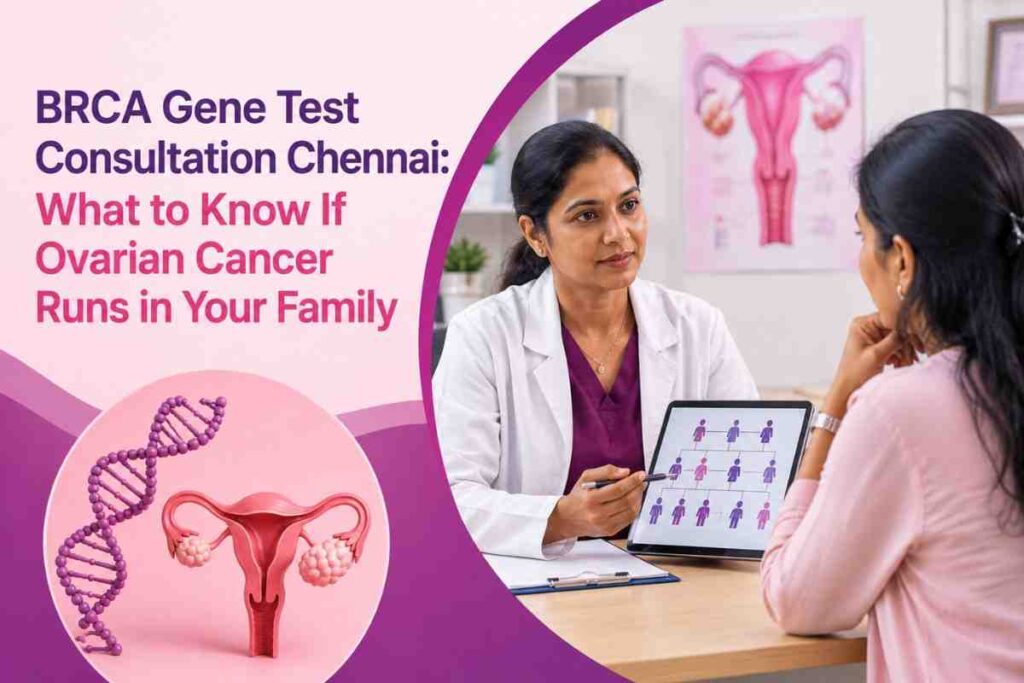
BRCA Gene Test Consultation Chennai: What to Know If Ovarian Cancer Runs in Your Family Meera was thirty-four when her mother was diagnosed with ovarian cancer for the second time. Sitting in the waiting room at a Chennai hospital, she found herself wondering something she had never said out loud before: could this happen to her too. That question is exactly what brings many women to a BRCA gene test consultation in Chennai, and it is a question worth taking seriously rather than pushing aside. Understanding Hereditary Ovarian Cancer Screening BRCA1 and BRCA2 are genes that everyone carries. Their normal job is to help repair damaged DNA in your cells. In some families, however, one of these genes carries a mutation passed down from a parent, and that mutation significantly raises the lifetime risk of ovarian and breast cancer. A BRCA gene test is a simple blood or saliva sample that checks for these inherited mutations. It does not diagnose cancer. It tells you whether you carry a higher genetic risk, which is a very different thing. Hereditary ovarian cancer screening exists precisely for this reason, to give women and their families clear information before symptoms ever appear, so decisions can be made calmly rather than in crisis. This is where a proper BRCA gene test consultation matters more than the test itself. A lab report on its own can be confusing, even frightening, if nobody explains what the numbers actually mean for your specific situation. A consultation puts the result in context, weighing your age, your family tree, and the type of cancers that have appeared in it. Genetic counselling is the part of this process that often gets skipped, and it should not be. Before and after the test, a specialist walks you through what a positive or negative result would actually mean for you, for your sisters, and for your daughters. Numbers on a report mean little without someone to interpret them in the context of your own family history. Not every woman with a family history of cancer needs testing, and not every negative result means the conversation ends there. This is precisely why BRCA1 BRCA2 genetic counselling is treated as a process rather than a single appointment. It usually spans an initial risk assessment, the test itself if recommended, and a results discussion that maps out practical next steps. Why This Matters for Women in Chennai and Tamil Nadu Ovarian cancer is frequently caught late in India, partly because early symptoms are vague and partly because genetic risk conversations rarely happen at the family clinic level. For a long time, women in Tamil Nadu who wanted proper hereditary cancer screening had to travel to Mumbai or Delhi for a specialist opinion. That gap has narrowed. Where to get BRCA gene testing in Chennai is now a question with a real, local answer, because fellowship-trained gynecologic oncologists are practising here with the same training standards found at India’s leading cancer centres. This matters for a very practical reason: a woman who has just watched a parent go through cancer treatment does not need the added burden of travelling to another city for a conversation about her own risk. Local access also changes how early these conversations happen. When testing and counselling are available close to home, women are more likely to act on family history before it becomes an emergency, rather than after. A BRCA gene test consultation in Chennai that includes proper genetic counselling, rather than just a lab requisition, gives Tamil Nadu families the same standard of preventive oncology care that was once available only in Mumbai or Delhi. Cultural factors also play a role here. Conversations about a mother’s or aunt’s cancer diagnosis are not always easy to bring up at home, and many women carry this question privately for years before acting on it. Having a specialist in the city who understands both the clinical and the personal weight of that question makes it easier to finally ask. Dr. Aiswarya Sekar’s Approach and Expertise Dr. Aiswarya Sekar is a Consultant Gynecologic Oncologist and Robotic Surgeon at Dr. Rela Institute and Medical Centre in Chromepet, Chennai. She trained in Gynecologic Oncology at Tata Memorial Hospital, Mumbai, one of the very few centres in the country where oncologists work daily with hereditary cancer syndromes, including BRCA1 and BRCA2 mutations. That background shapes how she approaches every consultation on this topic. Should I get tested for BRCA if my mother had ovarian cancer is one of the most common questions she hears, and her answer is never a blanket yes or no. It depends on the specific family history, the age at diagnosis of affected relatives, and other factors that a proper risk assessment brings out. For women who do carry a BRCA mutation and later require surgery, her training in fertility-preserving oncologic techniques and robotic surgery means treatment planning can weigh both cancer risk and a woman’s future fertility, rather than treating one automatically at the expense of the other. This combination of TMH training and hands-on robotic expertise is still uncommon in Chennai, which is part of what makes preventive oncology consultations here genuinely comprehensive rather than a referral checkbox. What to Expect: Your Care Journey at Rela Hospital The process usually begins with a detailed conversation, not a needle. Dr. Aiswarya first reviews your family history across at least two generations, noting who was affected, at what age, and with which type of cancer. This single step often reveals more than people expect. If testing is recommended, a blood sample is collected at Rela Hospital and sent to an accredited genetic laboratory. Results typically take a couple of weeks. During this waiting period, you are not left guessing. A doctor for hereditary cancer risk consultation in Chennai should prepare you for what each possible outcome means, so the result itself does not land as a shock. Once results arrive, the conversation continues. A negative result does not mean zero risk, and
HIPEC Treatment for Ovarian Cancer in Chennai Explained
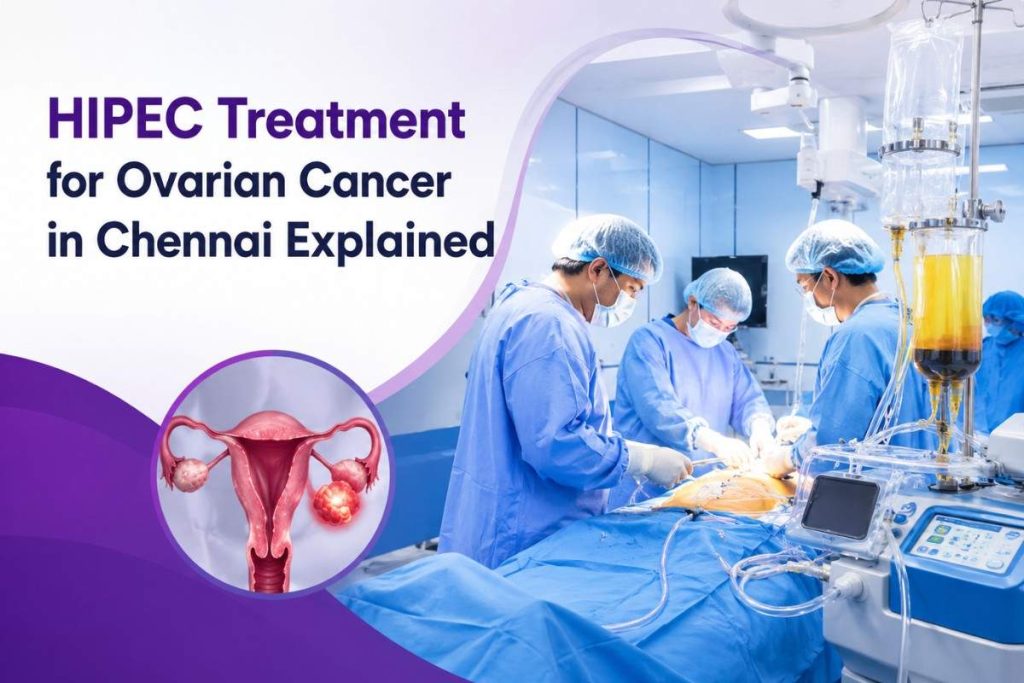
HIPEC Treatment for Ovarian Cancer in Chennai Explained When a family member first heard the word HIPEC during a discussion about her mother’s ovarian cancer treatment, she did what most of us would do. She opened her phone and started searching, trying to understand what it meant before the next appointment. If you’ve found yourself doing the same thing, searching for HIPEC treatment for ovarian cancer in Chennai because a doctor mentioned it almost in passing, this article is meant to slow things down and explain it properly. Understanding HIPEC Surgery Cost Chennai Families Often Ask About HIPEC stands for hyperthermic intraperitoneal chemotherapy. In plain terms, it’s a procedure where heated chemotherapy is circulated directly inside the abdominal cavity, immediately after surgery to remove visible tumour tissue. The idea is to target any microscopic cancer cells that might remain in that area, using heat to help the chemotherapy work more effectively on the tissue lining the abdomen. It’s usually considered for certain cases of advanced ovarian cancer, and sometimes for cancers that have spread to the peritoneum, the thin lining that covers the organs inside the abdomen. HIPEC is not a standalone treatment. It’s combined with a surgery called cytoreductive surgery, where the surgeon removes as much visible tumour as safely possible before the heated chemotherapy is administered. One of the most common questions families ask, often before they’ve even finished processing the diagnosis, is about cost. HIPEC surgery cost in Chennai depends on several factors, including the extent of surgery required, the hospital stay, and any additional treatment needed afterward. This is something best discussed directly with the surgical team during consultation, since every case is different and quoting a fixed number without an individual assessment wouldn’t be responsible. Why This Matters for Women in Chennai and Tamil Nadu For years, a recommendation for HIPEC often meant a referral out of the city, usually to Mumbai or one of the larger cancer centres in North India. That meant arranging travel, accommodation, and time away from home, on top of everything else a family was already managing. Having a HIPEC specialist in gynecologic oncology based in Chennai changes that equation considerably. For many families in Tamil Nadu, knowing that this level of surgical expertise exists locally, supported by a hospital with the infrastructure for complex abdominal surgery, can be the difference between delaying treatment and starting it within weeks. If you’re trying to find the best hospital for HIPEC treatment in Tamil Nadu, proximity to a centre that performs this procedure regularly is genuinely part of what makes care safer and more coordinated. Dr. Aiswarya Sekar’s Approach to HIPEC and Advanced Ovarian Cancer Dr. Aiswarya Sekar is a Consultant Gynecologic Oncologist and Robotic Surgeon at Dr. Rela Institute and Medical Centre in Chromepet, Chennai. She completed her MCh in Gynecologic Oncology with subspecialty training at Tata Memorial Hospital, Mumbai, one of the centres where HIPEC techniques for gynecologic cancers have been refined and taught to surgeons from across the country. Her practice includes managing primary and interval cytoreductive surgery for ovarian cancer, with HIPEC used for selected advanced cases where it’s clinically appropriate. This selection matters. HIPEC isn’t suitable for every patient or every stage of disease, and part of the surgical assessment involves determining whether a patient is likely to benefit from it. A question that comes up often during consultations is how HIPEC compares to standard chemotherapy. HIPEC versus chemotherapy for ovarian cancer isn’t really an either-or choice in most cases. HIPEC is delivered once, during surgery, targeting the abdominal cavity directly, while systemic chemotherapy is given over several cycles and works throughout the body. Many patients receive both, at different points in their treatment plan, depending on what the disease and the pathology findings show. What to Expect: Your Care Journey at Rela Hospital The path toward a decision about HIPEC usually starts with a detailed review of imaging and prior reports. Dr. Aiswarya assesses the extent of disease, discusses the findings with the patient and family, and explains whether cytoreductive surgery with HIPEC is being considered, and why. If surgery is planned, the team at Rela Institute and Medical Centre prepares the patient through pre-operative assessments, including evaluating overall fitness for a longer surgical procedure, since HIPEC surgery typically takes longer than standard surgery and involves a hospital stay for recovery and monitoring. After the procedure, recovery is gradual and closely monitored, with the care team watching for how the body responds in the days following surgery. Follow-up appointments continue afterward to review pathology results and plan any further treatment. For families trying to consult a gynec oncologist for ovarian cancer in Chennai, having this entire pathway, assessment, surgery, and follow-up, managed by one specialist team can make a genuinely difficult period feel less fragmented. Warning Signs: When You Should See a Specialist Some symptoms warrant a prompt evaluation by a gynecologic oncologist, particularly in someone with a known ovarian mass or a prior cancer diagnosis. These include: Persistent abdominal bloating or swelling that doesn’t improve New or worsening abdominal pain A noticeable increase in abdominal girth over a short period Feeling full quickly, or reduced appetite that doesn’t improve Unexplained weight loss Fluid buildup in the abdomen noticed on a scan A recurrence of symptoms after previous ovarian cancer treatment Always consult a qualified medical professional for diagnosis and treatment. Self-diagnosis based on online information is never a substitute for a clinical evaluation. Closing and CTA Reading up on HIPEC because someone you love might need it isn’t easy, and getting this far in the article already says something about how much you care. Dr. Aiswarya Sekar sees patients and families at Dr. Rela Institute and Medical Centre in Chromepet, Chennai, to discuss whether HIPEC and cytoreductive surgery are appropriate next steps. You can call the clinic or use the website’s contact page to arrange an OPD consultation. You don’t have to figure this out on your own. Medically reviewed by Dr. Aiswarya Sekar,
Best Robotic Surgeon for Ovarian Cancer in Chennai
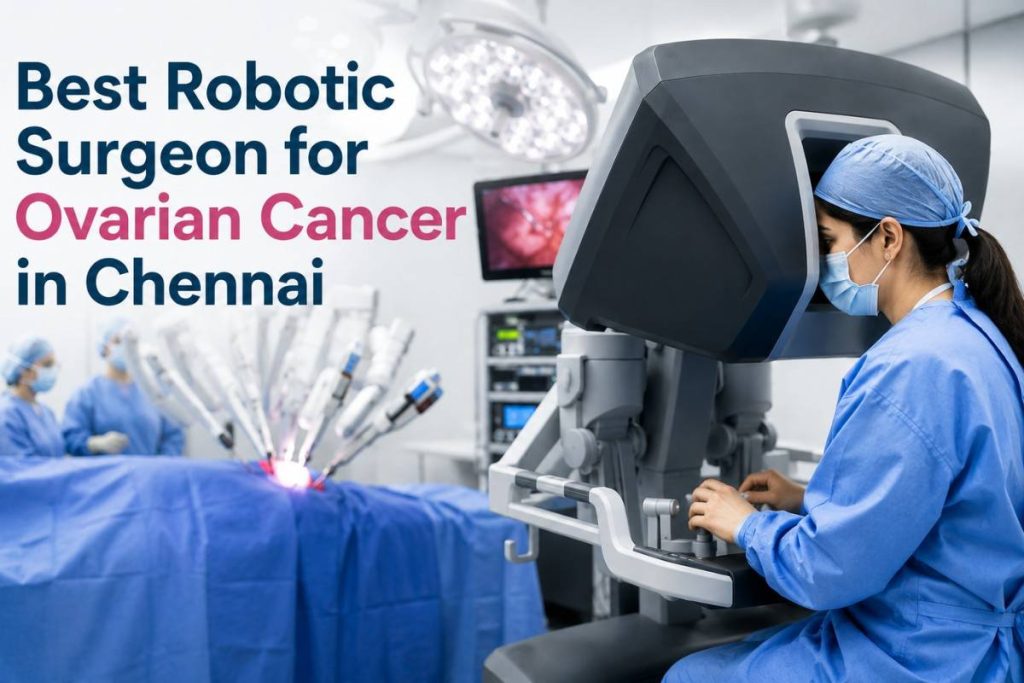
Best Robotic Surgeon for Ovarian Cancer in Chennai She had gone in for what she thought was a routine scan. A few days later, the phone call came back with a word she wasn’t expecting to hear that week: mass. Suddenly, a woman who had been managing work, family, and a hundred small responsibilities in Chennai was sitting with a report in her hands, trying to figure out who to call next. If you’re searching for the best robotic surgeon for ovarian cancer in Chennai right now, there’s a good chance you’re in a similar moment, and the most important thing to know is that this decision deserves time, clarity, and the right specialist. Understanding Ovarian Cancer and Robotic Surgery in Chennai Ovarian cancer begins in the cells of the ovaries, the small organs on either side of the uterus that produce eggs and hormones. In its early stages, it often causes few or no symptoms, which is part of why it’s sometimes found later than other gynecologic cancers. When a mass or cyst is identified, the next questions are usually about whether it’s benign or malignant, and what kind of surgery, if any, is needed. This is where robotic surgery comes in. Robotic-assisted surgery uses a system of small instruments controlled through tiny incisions, guided by a surgeon sitting at a console with a magnified, three-dimensional view of the surgical area. For ovarian cancer, this can mean more precise tissue handling, smaller incisions, and often a faster return to daily life compared with traditional open surgery. It doesn’t change the diagnosis itself, but it can change how the body experiences treatment. Why This Matters for Women in Chennai and Tamil Nadu For a long time, women in Tamil Nadu who needed advanced gynecological cancer surgery often had to travel to Mumbai, Delhi, or Bangalore for specialist opinions, sometimes after an initial diagnosis had already been made closer to home. That gap between diagnosis and specialist care can be stressful, expensive, and emotionally exhausting for a family already under pressure. Having access to a gynecological oncologist trained at a centre like Tata Memorial Hospital, but practising right here in Chennai, changes that picture. It means a woman from Chromepet, Tambaram, or even further out in Tamil Nadu doesn’t have to choose between getting on a flight and getting the right kind of surgical opinion. For many families researching which doctor is best for ovarian cancer surgery in Chennai, the relief of finding that expertise locally is often the first real moment of calm in the whole process. Dr. Aiswarya Sekar’s Approach and Expertise Dr. Aiswarya Sekar is a Consultant Gynecologic Oncologist and Robotic Surgeon at Dr. Rela Institute and Medical Centre in Chromepet, Chennai. She completed her MCh in Gynecologic Oncology with subspecialty training at Tata Memorial Hospital, Mumbai, one of the country’s most respected centres for cancer care, after her earlier training at Madras Medical College and Thanjavur Medical College. Her work focuses specifically on cancers of the ovaries, uterus, cervix, and vulva, using both robotic and laparoscopic techniques where appropriate. For ovarian cancer in particular, this includes primary and interval cytoreductive surgery, with HIPEC, or heated intraperitoneal chemotherapy, used in selected advanced cases. HIPEC involves delivering heated chemotherapy directly into the abdominal cavity during surgery, targeting any remaining cancer cells in that area. For younger women, fertility is often one of the first concerns that surfaces, sometimes even before questions about the cancer itself. Dr. Aiswarya’s training includes fertility-preserving surgical techniques, which means that in carefully selected early-stage cases, it may be possible to treat the cancer while preserving the uterus or ovarian tissue. Whether this is appropriate depends entirely on the individual case, the stage of disease, and a detailed discussion with the patient. For someone weighing the robotic surgery for ovarian cancer cost in Chennai against these considerations, that conversation about what’s medically appropriate has to come first, with cost discussed openly as part of the same consultation. What to Expect: Your Care Journey at Rela Hospital The first visit usually starts with a conversation, not a procedure. Dr. Aiswarya reviews existing scans, blood tests such as CA-125, and any previous reports the patient brings along. If more information is needed, additional imaging or tests may be arranged at Rela Institute and Medical Centre before any decisions are made about surgery. Once a diagnosis is clearer, the treatment plan is discussed in detail, including whether robotic surgery is suitable, what the surgery will involve, expected recovery time, and what happens afterward in terms of chemotherapy or follow-up care if needed. Patients are encouraged to ask questions at every stage, including bringing a family member into these discussions. After surgery, recovery from robotic procedures is often quicker than from open surgery, with many patients mobilising within a day or two. Follow-up visits continue afterward to monitor recovery and plan any further treatment. For many people searching for a top gynec oncologist for ovarian cancer near me, this structured, step-by-step process is exactly what helps turn an overwhelming situation into something manageable, one appointment at a time. Warning Signs: When You Should See a Specialist Certain symptoms warrant a prompt visit to a gynecologic oncologist, particularly if they are new, persistent, or unusual for you. These include: Persistent bloating or abdominal swelling that doesn’t go away after a few weeks Pelvic or lower abdominal pain that is new or ongoing Feeling full quickly after eating, or loss of appetite Changes in bowel or bladder habits, such as increased urgency or frequency Unexplained weight loss Postmenopausal bleeding or unusual vaginal bleeding An ovarian mass or cyst found on a scan, or elevated CA-125 levels on a blood test A strong family history of ovarian, breast, or related cancers Always consult a qualified medical professional for diagnosis and treatment. Self-diagnosis based on online information is never a substitute for a clinical evaluation. Closing and CTA Reaching out for a specialist opinion, especially when cancer is even a possibility, takes