
After her biopsy results came back, the surgeon used a phrase that stayed with her long after she left the room. Minimally invasive. She didn’t fully understand what it meant for her own treatment until she sat down that evening and started reading. If you’ve recently been told that robotic hysterectomy for endometrial cancer in Chennai is being recommended for you, this is the kind of explanation that conversation often doesn’t have time for.
Understanding Minimally Invasive Uterine Cancer Surgery
Endometrial cancer, which develops in the lining of the uterus, is most often treated with surgery to remove the uterus, known as a hysterectomy. In many cases, the ovaries and fallopian tubes are removed as well, along with some nearby lymph nodes to check whether the cancer has spread.
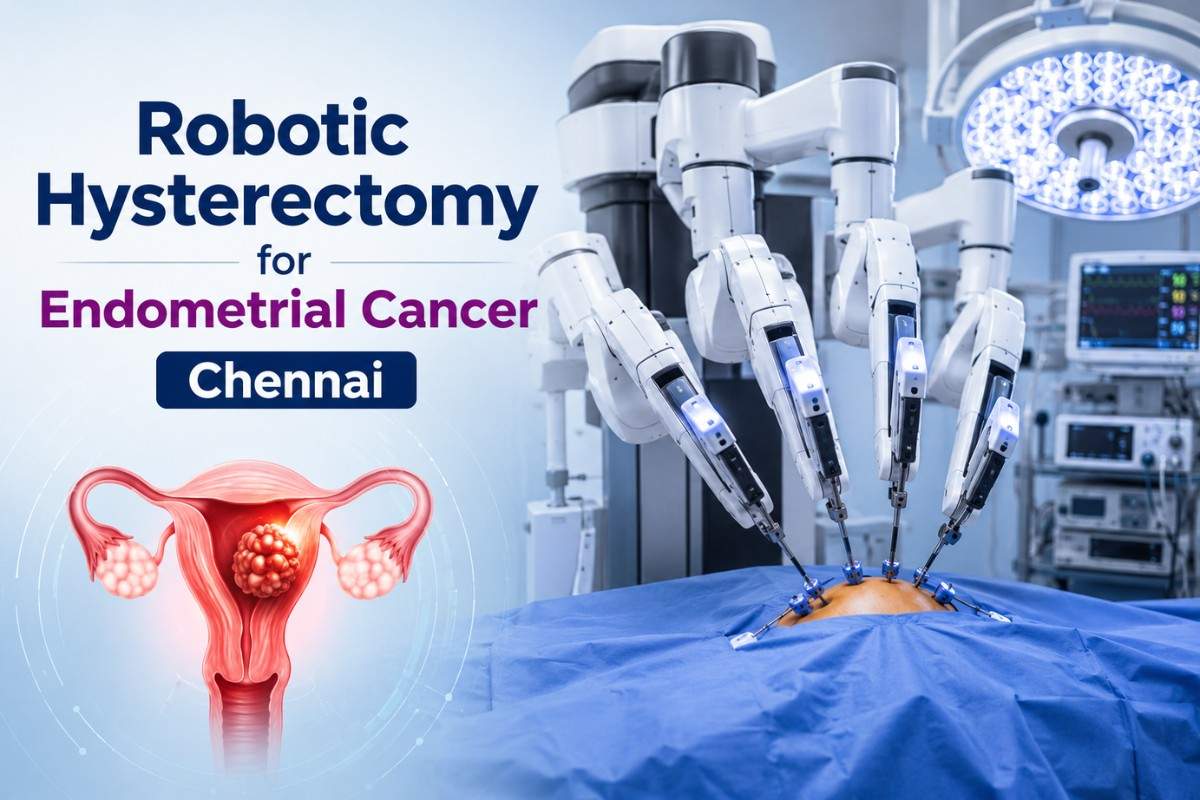
The word minimally invasive simply describes how the surgery is performed, not what is removed. Instead of one large incision across the abdomen, the surgeon works through several small incisions, using long, thin instruments and a camera to see inside the body. Robotic surgery is one form of this approach, where the surgeon controls robotic arms from a console, with a magnified three-dimensional view of the surgical area.
For many patients, hearing that their surgery can be done this way brings genuine relief, mainly because it often means less pain afterward and a shorter hospital stay. But it’s worth understanding clearly that the cancer treatment itself, removing the uterus and assessing the lymph nodes, is the same regardless of the surgical approach. The robotic technique changes how it’s done, not what is done.
Why This Matters for Women in Chennai and Tamil Nadu
Open surgery has long been the default for gynecological cancer cases in many parts of Tamil Nadu, partly because robotic and advanced laparoscopic surgery requires specific training and equipment that isn’t available everywhere. For women facing a cancer diagnosis, this often meant accepting a longer recovery as simply part of the deal.
That’s changing, gradually, in Chennai. A common question patients bring up during consultation is robotic versus open surgery for uterine cancer, which is better, and the honest answer is that it depends on the individual case, including the size of the uterus, prior surgeries, and overall health. What matters is having a surgeon trained in both approaches who can make that recommendation based on your specific situation, rather than offering only one option because it’s the only one available.
Dr. Aiswarya Sekar's Approach to Robotic Surgery for Endometrial Cancer
Dr. Aiswarya Sekar is a Consultant Gynecological Oncologist and Robotic Surgeon at Dr. Rela Institute and Medical Centre in Chromepet, Chennai. She completed her MCh in Gynecologic Oncology with subspecialty training at Tata Memorial Hospital, Mumbai, and holds robotic surgery certification from The Griffin Institute in London.
For endometrial cancer, her approach typically involves robotic or laparoscopic staging surgery, which includes hysterectomy along with assessment of the lymph nodes using techniques such as sentinel lymph node mapping where appropriate. As a robotic surgery gynecologic oncologist at RIMC, she’s also able to manage more complex cases that might otherwise require open surgery elsewhere, using the same minimally invasive principles.
For younger patients diagnosed at an early stage who are concerned about fertility, there are select situations where fertility preserving discussions are appropriate, though this depends entirely on the specifics of the diagnosis. If you’re trying to find the best robotic hysterectomy surgeon in Chennai for a uterine cancer diagnosis, what matters most is finding someone who can explain, honestly, whether this approach fits your particular case.
What to Expect: Your Care Journey at Rela Hospital
The process usually begins with a review of your biopsy results, imaging, and any prior reports during your first consultation. Dr. Aiswarya explains the diagnosis in clear terms, discusses whether robotic surgery is appropriate, and answers questions about what the procedure will involve.
Before surgery, routine pre-operative tests are arranged to confirm you’re fit for the procedure. On the day of surgery, the robotic hysterectomy itself typically takes a few hours, and most patients stay in hospital for a short period afterward for monitoring.
Recovery time after robotic hysterectomy for cancer is often noticeably shorter than after open surgery, with many women able to resume light activities within one to two weeks, though this varies by individual and depends on the full extent of surgery performed. Endometrial cancer hysterectomy recovery also includes a follow-up visit to discuss the final pathology report, which determines whether any additional treatment is needed.
Warning Signs: When You Should See a Specialist
The following symptoms warrant a prompt evaluation by a gynecologic oncologist, particularly in women near or past menopause. These include:
- Any vaginal bleeding after menopause, even a small amount
- Unusually heavy or irregular periods, especially in the years approaching menopause
- Pelvic pain or a feeling of pressure that persists
- Unexplained weight loss
- A thickened uterine lining identified on an ultrasound
- Abnormal results from an endometrial biopsy
- A family history of Lynch syndrome or other hereditary uterine cancer risk
Always consult a qualified medical professional for diagnosis and treatment. Self-diagnosis based on online information is never a substitute for a clinical evaluation.
Closing and CTA
Being told you need surgery for uterine cancer is a lot to absorb in one appointment, and it’s completely reasonable to want more information before you feel ready to move forward. Dr. Aiswarya Sekar sees patients at Dr. Rela Institute and Medical Centre in Chromepet, Chennai, to discuss robotic hysterectomy options and answer these questions directly. You can call the clinic or use the website’s contact page to arrange an OPD appointment whenever you’re ready to take that step.
Rencent Blogs.
-
Best Hospital for Gynecologic Cancer Surgery Chennai
-
Robotic Surgery Endometriosis Cancer Risk Chennai Guide
-
Post Hysterectomy Cancer Diagnosis Consultation Chennai
-
Choosing Surgeon for Gynecologic Cancer Surgery Chennai
-
Robotic Surgery Uterine Cancer Chennai: Fibroid or Cancer?
-
Fertility Preserving Ovarian Cancer Treatment in Chennai
-
Advanced Ovarian Cancer Treatment Specialist in Chennai
-
Lynch Syndrome Uterine Cancer Consultation in Chennai Explained
-
Endometrial Cancer Symptoms: When to See a Doctor in Chennai
-
Robotic Surgery for Gynecologic Cancer Cost in Chennai